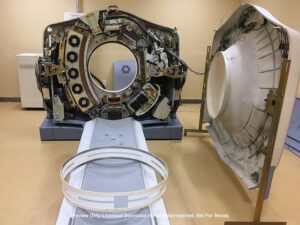
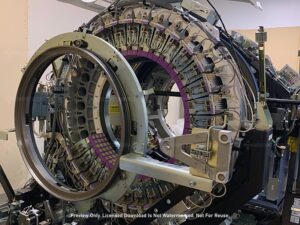
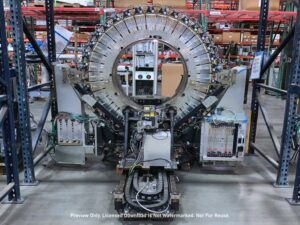
Did you know PET Scans integrate space exploration technology to detect cancers in the human body? The detector assembly is the same detector technology used by NASA in the FERMI space telescope to see deep into space. This is just one of the facts about PET scans that make this medical imaging technology so amazing. This article covers 50 of the most interesting facts about PET scans. I hope you enjoy!
50 facts About PET Scans You Probably Didnt Know
1. PET scanning was first conceptualized in the 1950s, but clinical use didn’t take off until the 1970s–1980s.
2. PET was developed as a way to measure brain function, not just structure. It’s meant to show how anatomy works.
3. The first PET scanners were built for research use, primarily in neuroscience labs.
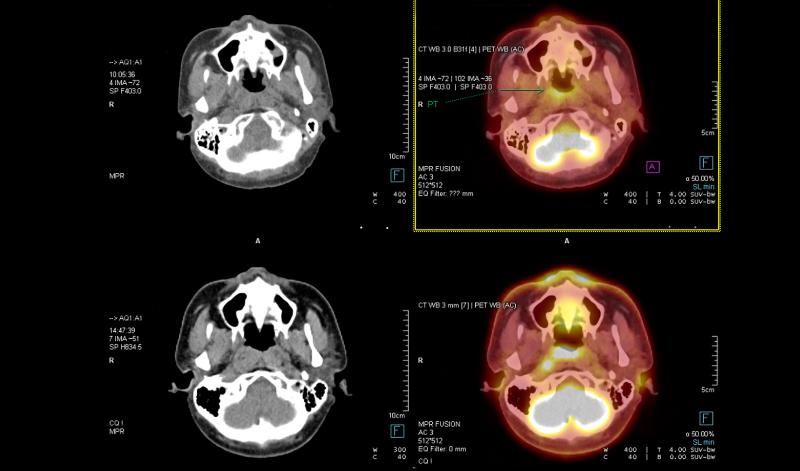
4. The concept of a PET-CT scanner was first discussed in Geneva, Switzerland by David Townsend and Ronald Nutt. The combination of PET with CT was a game-changer and became commercially available in 2001.
“PET vs CT in One Machine (What Each Part Does)” published to the MRIPETCTSOURCE YouTube Channel
You can read DW Thompsons original excerpts here: https://pmc.ncbi.nlm.nih.gov/articles/PMC2777694/
All rights reserved.
5. Modern PET/CT scanners are used worldwide for oncology, cardiology, and neurology.
6. PET uses positrons, which are the antimatter equivalent of electrons.
7. When a positron meets an electron in your body, they annihilate and emit two photons traveling in opposite directions.
8. PET scanners detect these photons and reconstruct images based on where they came from.
All rights reserved.
9. PET is not just an anatomical scan—it’s a functional imaging modality that shows metabolic activity.
10. The most commonly used PET radiotracer is Fluorodeoxyglucose (FDG), a radioactive sugar.
11. FDG behaves like glucose, accumulating in cells with high energy needs—like cancer or inflamed tissue.
12. PET radiotracers decay quickly and are usually out of your body within a few hours.

13. The radiation dose from a PET scan is typically comparable to an abdominal CT scan.
14. There are dozens of specialized PET tracers being developed for Alzheimer’s, epilepsy, infection, and more.
15. Some PET radiotracers are made onsite in a cyclotron, due to their short half-lives.
16. Patients are often asked to fast before a PET scan to improve image quality by reducing normal glucose levels.
17. PET scans are sensitive enough to detect cancer recurrence even before it’s visible on other scans.
18. You may be asked to rest quietly in a dark room before your scan—this reduces unnecessary brain activity.
19. Pregnant or breastfeeding women are generally advised to avoid PET unless absolutely necessary.
20. After a PET scan, you’re slightly radioactive for a few hours—but not dangerous to others.
21. Over 90% of PET scans are done for cancer detection, staging, and monitoring.
22. PET can differentiate benign from malignant tumors based on metabolic activity.
All rights reserved.
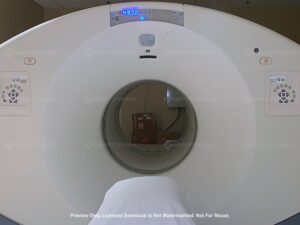
23. PET is a key tool in evaluating dementia, including Alzheimer’s disease, by detecting changes in brain metabolism.
24. PET is also used in cardiology to assess blood flow and identify areas of viable but underperfused heart tissue.
25. PET can help detect fever of unknown origin, especially when standard tests fail.
26. PET is commonly used to locate occult infections, like infected prosthetic joints or endocarditis.
27. PET/MRI scanners now combine metabolic and soft tissue imaging in a single scan.
Related topic: magnetic resonance imaging (MRI)
28. Some cancers, like lymphoma, are particularly well-evaluated with PET for treatment response.
29. PET is often used in radiation therapy planning to precisely target active tumor areas.
30. In epilepsy, PET can locate the seizure focus when other imaging is inconclusive.
31. PET brain scans can measure dopamine activity, useful in Parkinson’s disease diagnosis.
32. PET can show amyloid plaques in the brain, helping diagnose Alzheimer’s before symptoms worsen.
33. Functional PET scans are used in research to study emotion, memory, and language pathways in the brain.
34. PET is helping researchers study the effects of psychedelic drugs on brain activity.
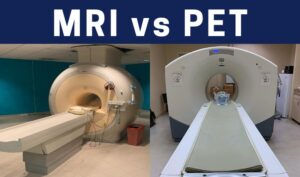
35. Unlike MRI, PET can image cellular metabolism and neuroreceptor activity in real time.
36. Total-body PET scanners are now being developed that can image the entire body simultaneously in seconds.
37. Artificial intelligence is being used to speed up PET scan reconstruction and improve image quality.
38. PET scans are being combined with theranostics—treating disease with the same molecules used for imaging.
39. Researchers are developing PET tracers that bind to specific tumor proteins, offering “personalized” imaging.
40. Some PET scans can detect inflammation and immune cell activity, not just cancer.
41. PET is one of the few imaging techniques based on antimatter physics.
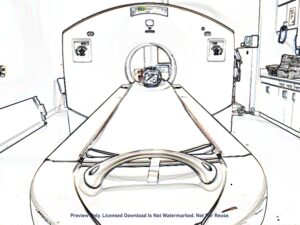
42. PET scanners must be carefully calibrated to avoid interpreting normal structures as pathology.
43. Brown fat (a heat-generating fat) can light up on PET scans, especially in cold conditions.
44. Your brain is one of the most glucose-hungry organs—this shows up clearly on PET.
45. Even intense muscle movement or talking before a scan can affect PET images.
46. Animals like mice and monkeys are scanned with tiny PET scanners for research purposes.
47. Some PET tracers mimic amino acids or DNA building blocks, allowing very specific targeting.
48. PET scans may eventually be used to monitor cell therapies, like CAR T-cell therapy in cancer patients.
49. PET scans of the gut are being used to explore diseases like Crohn’s and IBS.
50. A PET scan offers a window into your body’s biology, not just its structure—making it one of the most futuristic tools in medicine.
Related Resources

Author:
Author Bio:
Read more on Larry’s author page.
The information provided by MRIPETCTSOURCE (“we,” “us,” or “our”) on https://www.medicalimagingsource.com (the “Site”) is for general informational purposes only. All information on the Site is provided in good faith, however we make no representation or warranty of any kind, express or implied, regarding the accuracy, adequacy, validity, reliability, availability, or completeness of any information on the Site. UNDER NO CIRCUMSTANCE SHALL WE HAVE ANY LIABILITY TO YOU FOR ANY LOSS OR DAMAGE OF ANY KIND INCURRED AS A RESULT OF THE USE OF THE SITE OR RELIANCE ON ANY INFORMATION PROVIDED ON THE SITE. YOUR USE OF THE SITE AND YOUR RELIANCE ON ANY INFORMATION ON THE SITE IS SOLELY AT YOUR OWN RISK.
Amazon and the Amazon logo are trademarks of Amazon.com, Inc. or its affiliates.