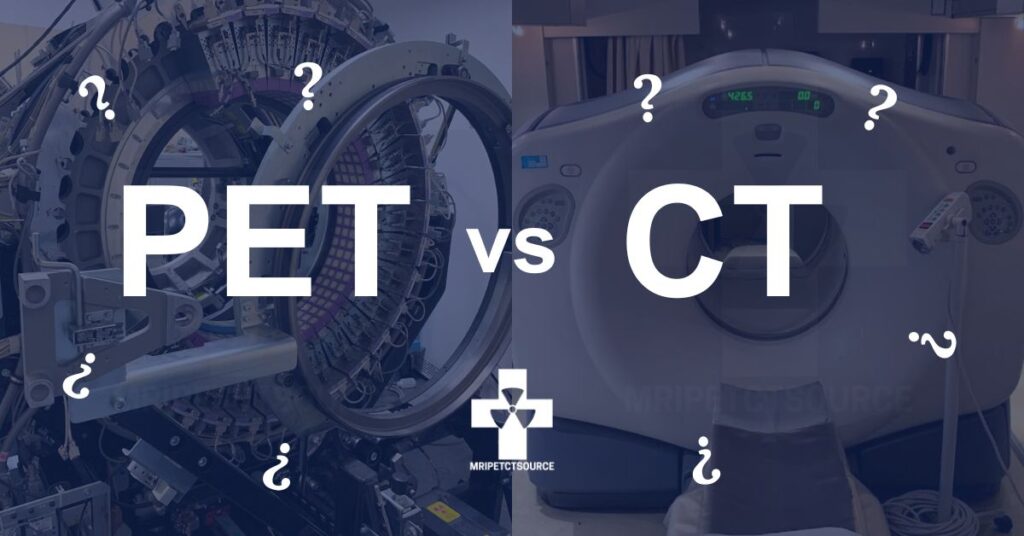
PET (Positron Emission Tomography) scans and CT (Computed Tomography) scans are both imaging tests used for medical diagnosis. While both tests use similar technology to produce detailed images of the inside of the body, they differ in the type of information they provide and the way they are used.
What Is A PET Scan?
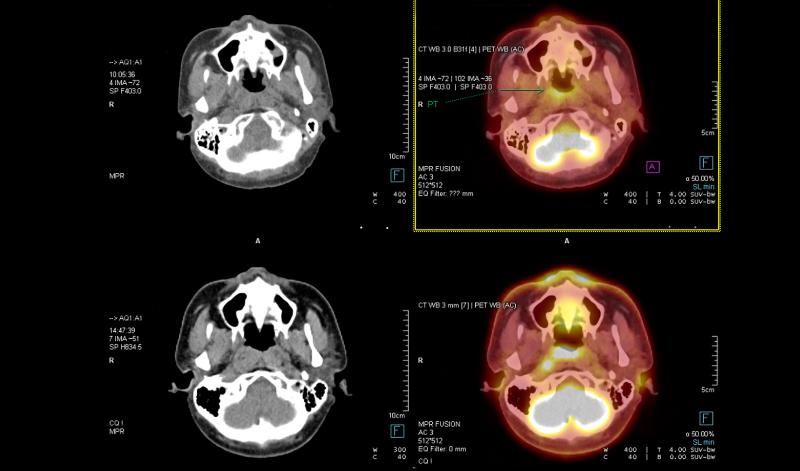
A PET scan uses a small amount of radioactive material, called a tracer, that is injected into the patient’s bloodstream. The tracer is then picked up by the body’s tissues and produces gamma rays that are detected by the PET scanner. The information is used to create a detailed image of the body’s functions and metabolic processes.
What Is A CT Scan?
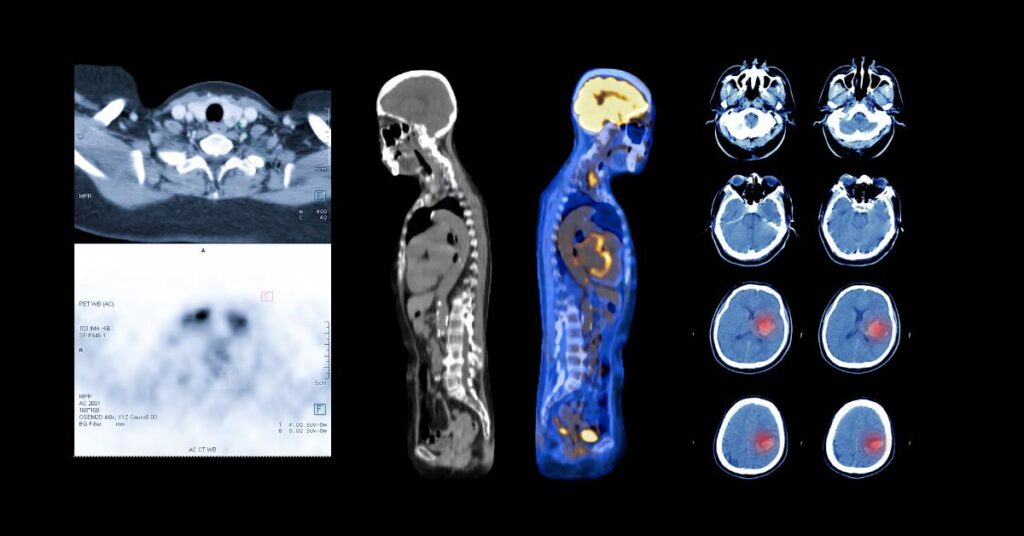
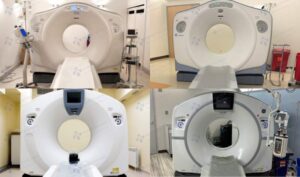
A CAT scan, on the other hand, uses X-rays and a computer to produce detailed cross-sectional images of the body. Unlike a PET scan, a CAT scan does not involve the injection of any radioactive material. Instead, the X-rays pass through the body and are detected by the scanner, creating a detailed image of the body’s anatomy.
What’s the Difference Between PET Scan and CT Scan?
PET scans are often used to evaluate the function of the body’s organs and tissues, including the brain, heart, lungs, liver, and other organs. They can be used to detect diseases such as cancer, Alzheimer’s, and heart disease, and to monitor the progress of treatment for these conditions.
CAT scans, on the other hand, are used primarily to evaluate the anatomy of the body and detect structural abnormalities, such as tumors, blood clots, and fractures. They are also used to evaluate the blood vessels and organs within the body and to diagnose injuries and diseases.
Key Takeaways
In conclusion, PET scans and CAT scans are both useful tools for medical diagnosis and both have their own unique strengths and weaknesses. While PET scans are better suited for evaluating the body’s metabolic processes and functions, CAT scans are better for evaluating the body’s anatomy and structural abnormalities. Your doctor will be able to help you determine which test is best for your specific situation.

Author:
Author Bio:
Read more on Larry’s author page.
Related Articles
From our “Radiology Library”

Visual representation of MRI magnetic field lines. License this image



CT scan ring artifact explained. CT scan machine pictured left, CT ring artifact example pictured right.
The information provided by MRIPETCTSOURCE (“we,” “us,” or “our”) on https://www.medicalimagingsource.com (the “Site”) is for general informational purposes only. All information on the Site is provided in good faith, however we make no representation or warranty of any kind, express or implied, regarding the accuracy, adequacy, validity, reliability, availability, or completeness of any information on the Site. UNDER NO CIRCUMSTANCE SHALL WE HAVE ANY LIABILITY TO YOU FOR ANY LOSS OR DAMAGE OF ANY KIND INCURRED AS A RESULT OF THE USE OF THE SITE OR RELIANCE ON ANY INFORMATION PROVIDED ON THE SITE. YOUR USE OF THE SITE AND YOUR RELIANCE ON ANY INFORMATION ON THE SITE IS SOLELY AT YOUR OWN RISK.
Amazon and the Amazon logo are trademarks of Amazon.com, Inc. or its affiliates.